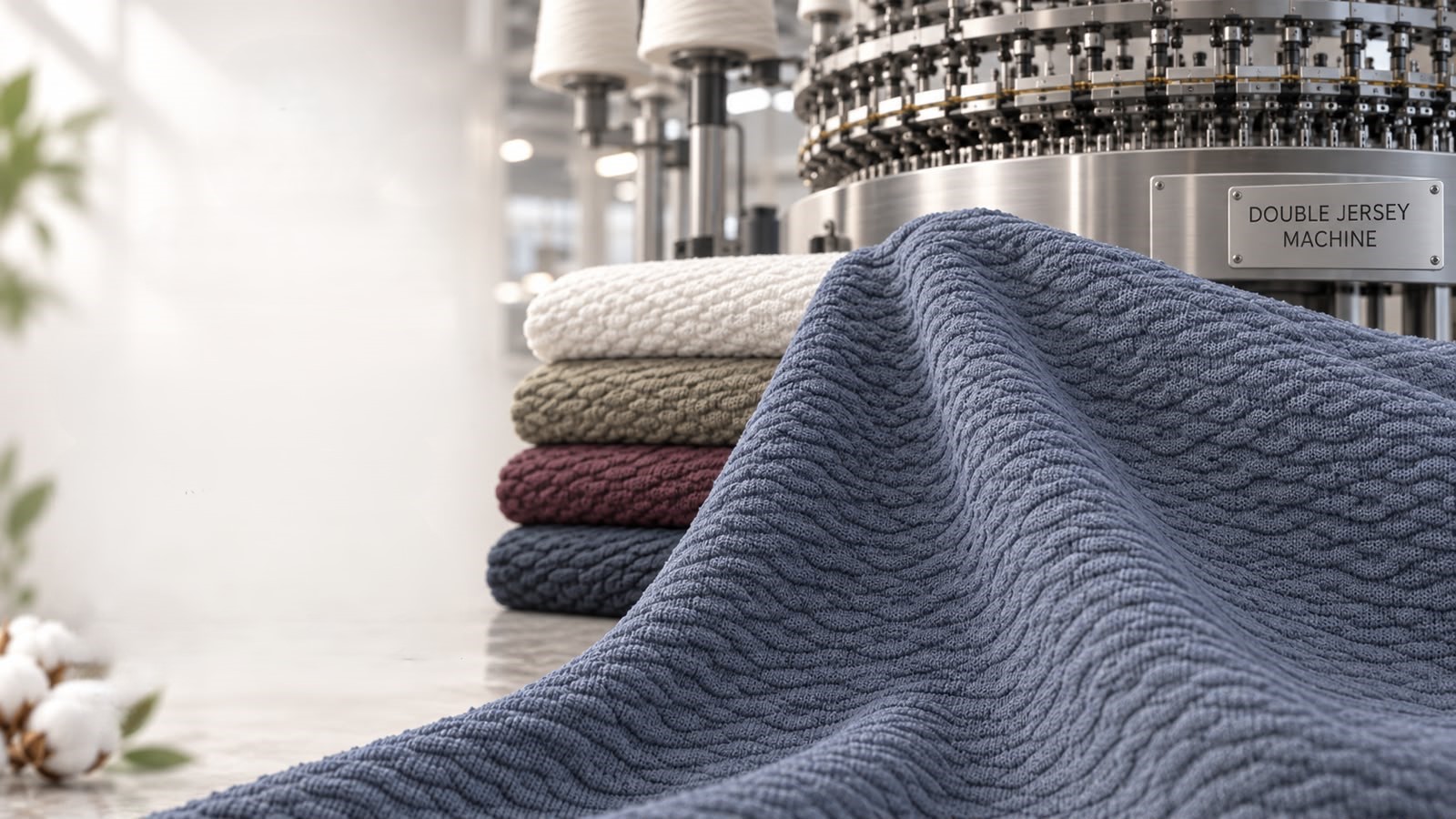
Choosing a knit fabric looks simple until the samples arrive and nothing quite matches what you had in mind. In practice, four questions decide almost everything: how heavy the fabric is, how much it stretches, how it is constructed and how it is finished.
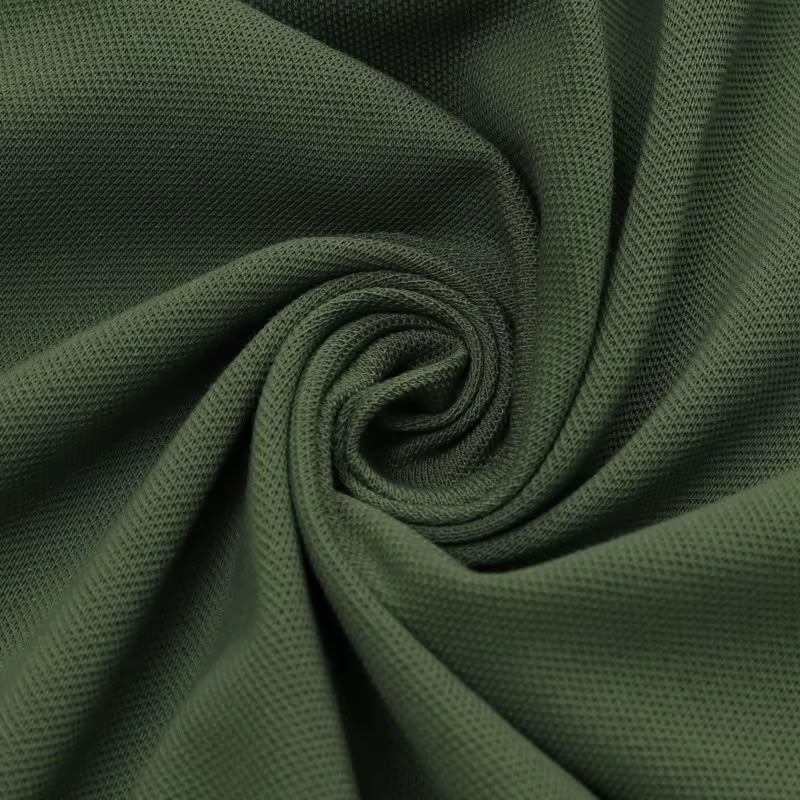
1. Weight (GSM) GSM - grams per square metre - is the single number that most influences drape, cost and season. A 120 GSM single jersey behaves like a light summer T-shirt; a 240 GSM interlock feels like structured shirting. Match the weight to the garment, not the other way around. 2. Stretch and Recovery Plain cotton jersey stretches a little. Adding elastane gives recovery - the fabric returns to shape instead of bagging at the elbows and knees. If the garment needs to fit close to the body, ask for a lycra blend and test recovery before committing to volume. 3. Structure Different knit structures behave very differently in the same garment: Single Jersey - light, breathable, curls at the edges. Interlock - double knit, smooth on both sides, stable. Rib - elastic by construction, perfect for cuffs and collars. Piqué - textured surface with natural breathability for polo shirts. Milton and Sponge Milton - dense and warm, built for colder months. 4. Finish Compacting, brushing and softening change how a fabric feels and how much it shrinks after washing. Always confirm the finish in writing, and ask for a care instruction sheet you can pass on to your own customers. At EL-HAMD TEX we publish the full specification for every fabric we produce, so the roll that leaves Badr City matches the sample that left our hands.
A fabric specification that reads "structure + weight + width + finish" removes most of the risk from a bulk order.